
Yehuda Armoni was born in Jerusalem on December 12, 1953. He is a scion of the Castel family, which arrived in the Land of Israel after the expulsion of the Jews from Spain more than five hundred years ago. His great-uncle is the outstanding painter Moshe Castel, to whom our Museum is dedicated. We are very excited to see the photograph, published here for the first time, which shows Yehuda and his brother Hagai standing next to their grandmother, Mazal, who is seated in the center, while her brother Moshe Castel is seated to her left. A number of works in this exhibition, grouped under the heading “Landscapes and Wedges,” have been painted under the influence of Moshe Castel’s art and in dialogue with it. The only two portraits in the exhibition – the one oil on canvas, the other charcoal on paper – are portraits of Castel, and we are grateful to Yehuda Armoni for agreeing to donate these artworks to our Museum collection.
According to Yehuda himself, he discovered his passion for painting, and his talent for it, back in his childhood; however, because of his professional commitments, and the resulting time constraints, he was unable to pursue this passion as he would have liked. Yehuda Armoni devoted twenty-five years of his life to defending our one and only country, serving as a high-ranking reserve officer in the IDF. Now, for almost a quarter century, he has been documenting the landscapes of our land; his documentation does not merely reflect nature, but also conveys the attitude of the person who is observing and experiencing it. Since the end of 2001, Armoni has devoted all his time to mastering the art of painting and creating his own works. In 2013, after studying with various artists for several years, he graduated from Israel Hershberg’s master class at the drawing and painting studio in Jerusalem.
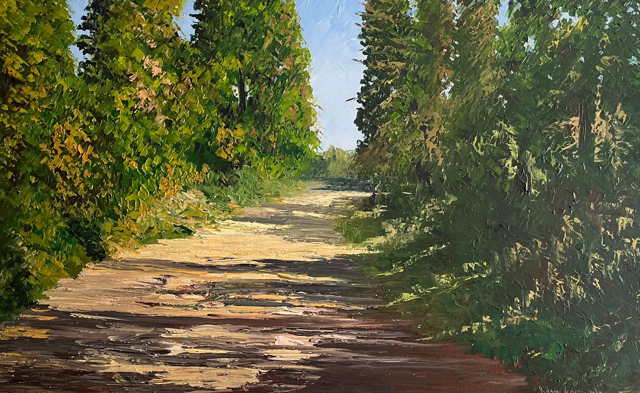
“I have always enjoyed hiking,” says Armoni, who has turned his hobby into his profession – and excelled in it. Yehuda Armoni is a landscape painter who practices his art outdoors (en plein air). Like almost all of us, Armoni loves the Impressionist painters who worked outdoors, and especially the two trailblazers of that artistic school: Jean-Baptiste-Camille Corot (1796–1875) and the Impressionist par excellence, Claude Monet (1840–1926). Having studied their approach, he excels at ‘direct painting’ (premier coup) through observation; he has made it his custom to finish a painting in a single session. He feels that he must paint quickly, since the sun and the clouds are in constant motion, and the motif of the painting may change at any moment, to say nothing of the difficulty of capturing the nuances of light over time. Armoni paints alone, always in a standing position, for three hours straight, without pause. Nowadays, he works in a studio, as well. His canvases, which tended to range in size from 20×20 cm to 40×50 cm, would sometimes grow much larger, and the present exhibition features eight works measuring 1 meter (or even more) in width. Other artists for whom Armoni, as an inveterate lover of art, feels an affinity – Vincent van Gogh (1853–1890), Edward Hopper (1882–1967), and Andrew Wyeth (1917–2009) – have affected his artistic manner to a much lesser extent than have Camille Corot and Claude Monet; nevertheless, studying their legacy seems to have helped him overcome his inner compulsion to finish the painting before the sun and the clouds move away. Armoni points out that Corot, too, would continue working in his studio on paintings begun outdoors, and that his own decision to do some of his work indoors is solely due to the fact that he cannot hope to finish a large canvas in 2–3 hours. Armoni remains highly goal-oriented; he would never sign a painting that seemed unfinished to him, yet he puts more trust in his visual memory and the photographs he has taken, and gives himself more time to finish working on each and every artwork.
In general, the Impressionist school has exerted a profound influence on Armoni’s oeuvre. In lieu of adhering to the classical painting techniques, in which the image is created first as a sketch, Impressionism offered a direct painting method, which was rooted in unmediated observation of nature; this is exactly how Armoni works. Through their creations, the Impressionists gave voice to a novel artistic approach; they painted outside the traditional studio in order to capture the passing moment, the light at a particular time of day, and its impact on the texture, the color palette, and the subject being painted. Throughout their careers, the Impressionists kept returning to the same elements and scenes, painting them from the same points of view, so as to capture the differences in lighting; this is just what Armoni does.
But – and this is a big but – that was the modus operandi of Camille Pissarro (1830–1903), Alfred Sisley (1839–1899), and, occasionally, Claude Monet in the 1860s and 1870s. Subsequently, the blending of Impressionism and Symbolism led to the almost total elimination of materiality: In the paintings of the late Monet, the Palace of Westminster in London is no longer recognizable; it is palpable, yet not ‘present’ on the canvas. This absence of materiality was already apparent in Monet’s earlier Impression, Sunrise, which attracted much attention at the First Impressionist Exhibition in 1874, and gave the school its name. Yehuda Armoni has not yet crossed this line, and the materiality in his works is never blurred or foggy. He spends much time painting in the Ben Shemen Forest and the Canada Park, which lie near his home in Modiin–Maccabim-Reut; in this, he follows in the footsteps of Camille Pissarro, the only Jew among the Impressionists, who used to paint in a garden in Pontoise, the Paris suburb where he lived. In the works of both artists, we can clearly and distinctly see the buildings, the paths, the trees, and the flowers. And yet, this comparison also brings out a striking difference between the two: While Pissarro was an outstanding painter of simple landscapes, his scenes also incorporate houses and peasants at work, depicting them in a serene and vividly colorful manner; by contrast, Armoni’s paintings do not show human figures, and his landscapes are completely pure, with nature their only ruler. Pissarro has left us many dozens of landscapes of Paris, and Boulevard Montmartre in particular (one of his works from this series is displayed at the Israel Museum in Jerusalem); not so Armoni, who claims to generally dislike painting in cities, even though he painted Jerusalem in 2009–2010, during his studies under Israel Hershberg. Armoni paints nature ‘as it is,’ and this is his way of refusing to partake in modern art, with all its diversity and multiplicity of schools, all of which (with the sole exception of the Realist school) refrain from doing this very thing – painting the material world as it is.
At this point, we must ask a rather complicated question: How can one secure a place in contemporary art, while rejecting all the modern artistic approaches and axioms? Surely, Yehuda Armoni is not the only such artist in our country; we can also mention the names of Marek Yanai, David Nipo, Aram Gershuni (although landscape paintings occupy a less prominent place in the oeuvre of these three), Israel Hershberg, Sigal Tsabari, and Eldar Farber. The school of painters of the landscapes of the Land of Israel has a distinguished pedigree: from Reuven Rubin (1893–1974), Ludwig Blum (1891–1974), and Isaac Alexander Frenel (1899–1981), which are among the founders of the post-Bezalel Israeli art, to artists such as Yehuda Rodan (1916–1996), Aharon April (1932–2020), and others. However, somewhat ironically, the artistic style of the aforementioned contemporary painters seems to precede that of Rubin, Blum, and Frenel, rather than continue it. At the same time, their works are utterly different from those of the Jerusalemite Academists of the early 20th century (i.e., Boris Schatz and his milieu). Thus, what we see here is a curious ‘return’ to a non-existent past.
Claude Monet’s late pieces tended toward the abstract, with an emphasis on the surface texture of the painting, and they had a major influence on subsequent artists, especially those of the Lyrical Abstraction school. Hence, there are those who claim that the Impressionist school closed the last phase of the Realist approach to art; Yehuda Armoni – like Marek Yanai, David Nipo, Israel Hershberg, Sigal Tsabari, and Eldar Farber – is among the prominent painters who are now reopening it. It is unclear where they should proceed from here, but it seems that there is actually no need to proceed. Unlike Corot, Monet, and Pissarro, Yehuda Armoni and his colleagues are well aware of what came next – and they have consciously decided to go back, where they intended to go. It is a stage in the history of art, which they love, and in which they wish to stay. To their credit, there are many thousands of art connoisseurs who share their love for that stage – and are attracted to works that remind them of it. Gabi Yair, who curated Yehuda Armoni’s first exhibition at the Castel Museum in the autumn of 2017, has perceptibly remarked that the artist “captures wide-angle landscape views,” that he focuses on “the landscape pattern as such,” and that his works are remarkable for their “airiness, breath, serenity, and viewer involvement.” He adds: “Armoni’s painting lets the spectator actually experience the place, and not merely look upon it.” This is a convincing explanation of the blanket acclaim won by this artist at all his exhibitions (his first solo show was held in 2006). This is now his tenth solo exhibition.
Here, we should introduce another dimension, which may seem rather trivial, but is nonetheless of immense importance: Israel is not France. The landscapes of France of the 1860s and 1870s can be seen in museums all over the world, on the canvases of the Impressionists (and the Academic artists, too); by contrast, the Land of Israel in those years had no native painting tradition. Its landscapes were then painted only by artists who came here as pilgrims: the Frenchman Jean-Léon Gérôme (1824–1904), the American Frederic Edwin Church (1826–1900), the German Gustav Bauernfeind (1848–1904), the Russian Vasily Polenov (1844–1927), and others – all of whom, without exception, had come to visit the Christian Holy Land. Their way of looking at the land was fundamentally different to that of Israeli painters like Yehuda Armoni, who were born and raised here – to say nothing of the fact that Israel itself has changed a great deal since then. Hence, the return of Armoni and his colleagues to the art of 150 years ago is limited: They are returning to something that has never existed in this land, and are actually creating this artistic school here for the first time. Armoni is particularly diligent in this area, and many of his works depict corners of the Land of Israel that have never been painted before. If his oeuvre were to be gathered in an extensive album, it would show almost all the forests, fields, seas, lakes, hills, and craters of the Land of Israel: in the Galilee and the Sharon plain, in the Ayalon Valley and the Negev. Conceptually, no other artist would have devoted more than twenty years of their life to the project of creating a portrait of the Land of Israel out of the totality of its individual landscapes – and yes, almost every painting by Armoni is a virtual portrait, albeit one that depicts a landscape, rather than a person. Last year, when we decided to award him the Moshe Castel Prize for Outstanding Contribution to Israeli Art, we naturally took this aspect into account.
Theoretically, landscape paintings can be utterly imaginary, but this is not Armoni’s way: Every work of his is an attempt to create a painting that would accurately reflect the location, with the greatest possible degree of verisimilitude. As Dr. Mimi Haskin, who was then head of the Literature Department of the Kibbutzim College, wrote in the introduction to the catalogue of Armoni’s previous exhibition at our Museum: “In his landscapes, there is quiet, and water, and sky; in them, we can hear the rustle of leaves in the grove, see the winding path that leads to a hidden place. And his gentle brush amplifies this beauty, and glorifies it.” These features of Armoni’s art have only become more pronounced in the seven years since. We are presenting a completely new exhibition, with fifty pieces that have never been exhibited before. Yehuda Armoni is submitting a detailed report on seven years of intense work. The actual number of artworks that he has produced is much higher, but we have carefully selected the pieces that we particularly loved, keeping the limitations of the exhibition hall in mind. Undoubtedly, there exists a continuity between this exhibition and the previous one, but all the present works, without exception, are new ones, never seen before in the museum space. We believe that Yehuda Armoni, one of Israel’s best contemporary artists, is entitled to such a ‘sequel exhibition’ like no other.
After the tragedy of October 7, we saw in the newsreels our land being burned and turned to ash; this exhibition, too, presents two pieces by Armoni titled After the Fire. “It pains me greatly to see this,” says the artist, “I have intentionally refrained from painting burned houses. I have made sure to show some green at the edge, meaning that there is hope, and there is a future.” It is this message that Yehuda Armoni seeks to convey, by showing us a land of stunning beauty, which opens its fields and secrets to all those who truly cherish it, are loyal to it, and defend it. Every visitor to this exhibition at the Castel Museum will be treated to a tour of the Ben Shemen Forest and the Ayalon Valley, Palmachim Beach and the Ramon Crater, Latrun and the Dead Sea – and many other places besides. There are fifty works in total, almost all of them exhibited for the first time. As is well known, the words “Zohi srtzi u-sdoteiha” are taken from a famous poem by Nathan Alterman, which has been set to music and performed by countless singers, from Arik Einstein to Ofra Haza. And yet, Yehuda Armoni’s exhibition inevitably brings to mind another celebrated Israeli song, by Ehud Manor, whose central message is now vindicated: We truly have no other land, even if it is burning… And Yehuda Armoni shows beyond all doubt just how beautiful this Land actually is. “With a painful body, with a hungry heart, here is my home,” says Yehuda Armoni, echoing Manor, and we all join him.
The Armoni family has supported our Museum a great deal since its establishment, and on February 14, 2024, when we awarded the prize to Yehuda, two nephews of Moshe Castel, Motke and David Armoni, came to the Museum. It was very exciting to photograph them, together with Yehuda and his brother Haggai, next to the monumental artwork Priests at the Western Wall in the Museum’s entrance hall. In the six months that have elapsed since then, both Motke Armoni (1930–2024) and Yehuda’s mother, Miriam Armoni (1925–2024), passed away. We dedicate this exhibition to their memory.
Let us end this article with the text of the document that we awarded to Yehuda Armoni together with the prize:
“Yehuda Armoni is not just a native of Jerusalem and the scion of a family that settled in the Land of Israel more than five hundred years ago. He loves the Land of Israel from the bottom of his soul, and paints its landscapes in an amazing and affecting way. Even before graduating from Israel Hershberg’s master class, let alone after it, Armoni enriched Israeli art with hundreds of landscape paintings, which accurately convey not only the appearance of the Land of Israel, in is various regions and nooks, but also the spirit of our country – and Armoni’s paintings prove beyond all doubt that our country’s land has a unique spirit. Yehuda Armoni’s works, with their amalgam of the Realist and the Impressionist schools, have been exhibited multiple times over more than twenty years, and have won universal acclaim. Since 2017, he has been an artist of the Rothschild art gallery in Tel Aviv. For his outstanding contribution to Israeli art, we present Yehuda Armoni with the Moshe Castel Prize.”
We are proud and excited to invite the visitors to this amazing exhibition at this particular time, which is so complex and challenging for the People of Israel, and we would like to thank Yehuda Armoni for his tireless work, and wish him to continue working on this important project.
Translated by Michael Sigal, edited by the author
יהודה ארמוני נולד בירושלים ב- 12 בדצמבר 1953. הוא בן למשפחת קסטל, שהגיעה לארץ-ישראל לאחר גירוש ספרד לפני יותר מחמש מאות שנה. דודו הגדול הוא הצייר הדגול משה קסטל, לו מוקדש המוזיאון שלנו. מרגש מאוד לראות את הצילום, המתפרסם כאן לראשונה, בו יהודה ואחיו חגאי עומדים ליד הסבתא שלהם, מזל, שיושבת במרכז, ובצד השמאלי שלה יושב משה קסטל. היצירות בתערוכה זו, המאוגדות תחת הכותרת “נופים ויתדות”, צוירו בהשפעת יצירות משה קסטל ובדיאלוג עימן. שני הפורטרטים היחידים בתערוכה – אחד שמן על בד, ואילו השני פחם על נייר, הם פורטרטים של קסטל, ואנו אסירי תודה ליהודה ארמוני על כך שהחליט להעניק יצירות אלה לאוסף המוזיאון שלנו.
כפי שמעיד יהודה ארמוני בעצמו, הוא גילה את התשוקה והכישרון לציור עוד בילדותו, אולם, בשל מחויבותו למקצוע ומגבלות הזמן הנובעות מכך, לא עסק בציור, כפי שרצה. יהודה ארמוני הקדיש 25 שנות חייו להגנה על ארצנו היחידה והוא אלוף משנה (מיל’) בצה”ל. עשרים וחמש שנים האחרונות הקדיש ארמוני לתיעוד נופי ארצנו; תיעוד שלא רק משקף את הטבע, אלא גם מבטא את ההרגשה של האדם המתבונן וחווה אותו. מסוף שנת 2001 מקדיש ארמוני את זמנו אך ורק ללימודי הציור וליצירת אמנות משלו. הוא למד אצל מספר אמנים במשך מספר שנים, וסיים את לימודיו בשנת 2013 כבוגר כיתת האמן של ישראל הרשברג בסטודיו לרישום ולציור בירושלים.
“תמיד אהבתי לטייל”, מספר ארמוני, שהפך את התחביב למקצוע – ומצטיין בו. יהודה ארמוני הוא צייר נוף, המצייר באוויר הפתוח (plein air). כמו כמעט כולנו, ארמוני אוהב את הציירים האימפרסיוניסטים שעבדו באוויר הפתוח, במיוחד את מי שסלל את הדרך לאסכולה זו, ז’אן-בטיסט קאמי קורו (1875-1796), ומי שהכי מזוהה איתה, קלוד מונה (1926-1840), ולמד את גישתם והתמחה בציור “במכה ראשונה” מתוך ההתבוננות; בעבר אף נהג להשלים ציור בישיבה אחת. הוא הרגיש שחייב לצייר מהר, כי השמש והעננים נעים כל הזמן ומוטיב הציור עשוי להשתנות בכל רגע, שלא לדבר על הקושי ללכוד את הניואנסים של האור לאורך זמן. ארמוני מצייר כשהוא לבד, תמיד בעמידה, במשך כשלוש שעות, ללא הפסקות. היום הוא כבר עובד גם בסטודיו. הבדים שלו, שבדרך כלל היו בגודל שבין 20 על 20 ס”מ עד ל- 40 על 50 ס”מ, לעיתים גדלו באופן משמעותי, ובתערוכתה הנוכחית מוצגות שמונה יצירות שכל אחת מהן היא מטר או אף יותר ברוחב. ציירים אחרים, אליהם הוא מתחבר כחובב אמנות מושבע – וינסנט ואן גוך (1890-1853), אדוארד הופר (1967-1882) ואנדרו וייאת’ (2009-1917) – השפיעו על סגנון הציור של ארמוני הרבה פחות מקאמי קורו וקלוד מונה, אך, ככל הנראה, לימוד מורשתם עזר לארמוני להשתחרר מהתחושה הפנימית שהוא חייב לסיים את הציור לפני שהשמש והעננים זזו. ארמוני נשאר מאוד מחויב לתוצאה, הוא אף פעם לא חותם על ציור שנראה לו טרם מוכן, אך הוא סומך יותר על זכרונו הוויזואלי ועל הצילומים שעשה ומקצה לעצמו יותר זמן להשלים את העבודה על כל יצירה ויצירה.
ככלל, השפעת האסכולה האימפרסיוניסטית על יצירותיו של ארמוני הינה רבה מאוד. במקום להיצמד לטכניקות ציור הקלאסיות, שעל פיהן נוצר הדימוי לראשונה כרישום, הציעה הטכניקה האימפרסיוניסטית אופן ציור ישיר, הנובעת מהתבוננות ישירה בטבע; גם ארמוני עובד בדיוק כך. האימפרסיוניסטים הביעו דרך יצירותיהם גישה אמנותית חדשנית; הם ציירו מחוץ לסטודיו המסורתי במטרה להביע את הרגע החולף, את האור בשעה מסוימת ביום, ואת השפעותיו על המרקם, על הצבעוניות ועל הנושא המתואר. במשך יצירתם, חזרו האמנים האימפרסיוניסטים, וציירו את אותם אלמנטים ואת אותן סצנות מאותן נקודות מבט, במטרה לתפוס את שונות האור, וכך בדיוק פועל ארמוני עצמו.
אבל – וזה אבל גדול – כך עבדו קמי פיסארו (1903-1830), אלפרד סיסלי (1899-1839) ולעיתים גם קלוד מונה בשנות השישים והשבעים של המאה התשע-עשרה; בהמשך השילוב בין האימפרסיוניזם לסימבוליזם הביא להיעלמות כמעט מוחלטת של החומריות – אי אפשר לזהות על בדיו המאוחרים של מונה את בניין הפרלמנט בלונדון, הוא מורגש, אך אינו “נוכח” בהם. היעדר חומריות כזאת בולט כבר גם ביצירה מוקדמת של מונה Impression, Sunrise [“התרשמות, זריחה”], שבלטה בתערוכת האימפרסיוניסטים הראשונה בשנת 1874 ועל שמה קבוצת אמנים זו קיבלה את שמה. יהודה ארמוני – לפחות עד עתה – לא עבר את הדרך הזו, החומריות אצלו מעולם לא מטושטשת ולא מעורפלת. הוא מרבה לצייר ביער בן שמן או בפארק קנדה, קרובים לביתו במכבים רעות, כמו שקמי פיסארו, היהודי היחיד בקרב האימפרסיוניסטים, צייר בגן בפונטואז – פרבר פריס, בו הוא התגורר. אצל שני הציירים הללו אנחנו רואים במדויק ובבירור את המבנים, את השבילים, את העצים ואת הפרחים. אך גם בהשוואה לקאמי פיסארו, חשוב להבליט פרט הדורש התייחסות: על אף שגם פיסארו היטיב לצייר מראות נוף פשוטים, בנופיו משולבים בתים ואיכרים בעבודתם, בתיאורים מלאי שלווה ובצבעים רעננים, ואילו בציוריו של ארמוני לא מופיעים בני אדם, נופיו טהורים לחלוטין, הטבע שולט בהם במלוא עוצמתו. פיסארו השאיר לנו עשרות רבות של נופי פריס, במיוחד של שדרות מונמארטר (אחת מיצירותיו מסדרה זו נמצאת במוזיאון ישראל בירושלים); לא כך ארמוני, שמעיד על עצמו שעל אף שצייר את ירושלים בשנים 2010-2009, כאשר השתלם בהנחייתו של ישראל הרשברג, ככלל, לא אוהב לצייר בערים. ארמוני מצייר את הטבע “כמו שהוא”, ובכך למעשה מסרב לשתף פעולה עם האמנות המודרנית שכולה מגוונת מאוד ושונה בין זרם זה לאחר, אבל כולם, פרט לאסכולה הריאליסטית, נמנעים מלעשות דווקא את זה – לצייר את העולם החומרי כמו שהוא. קשה להאמין שפעם הצייר האהוב על יהודה ארמוני היה פבלו פיקאסו; מאהבת נעורים זו לא נשאר, למעשה, ולו זכר.
נשאלת השאלה, והיא שאלה מורכבת למדי: איך להבטיח את מקומך באמנות העכשווית תוך דחיה מוחלטת של כל הגישות והאקסיומות של האמנות המודרנית? יהודה ארמוני בוודאי אינו הצייר היחיד כזה בארץ; אי אפשר שלא להזכיר את שמותיהם של מארק ינאי, דוד ניפו, ארם גרשוני (אם כי אצלם ציורי נוף אינם תופסים מקום מרכזי במכלול יצירותיהם), ישראל הרשברג, בהנחייתו ארמוני השתלם, סיגל צברי, ואלדר פרבר. מורשת ציורי נופי ארץ-ישראל הינה מושרשת למדי – מראובן רובין (1974-1893), לודוויג בלום (1974-1891) ויצחק פרנל (1981-1899), שנמנים עם מייסדי האמנות הארץ-ישראלית הפוסט-בצלאלית, עד ליהודה רודן (1996-1916), אהרון אפריל (2020-1932) והלאה, אך באופן אירוני למדי הציירים העכשוויים שהוזכרו לעיל מבחינת סגנונם האמנותי כאילו קדמו לרובין ובלום ולא המשיכו אותם. בו-זמנית, יצירותיהם כלל לא דומות לאלה של האקדמיסטים הירושלמים מראשית המאה העשרים, של בוריס שץ וסביבתו. כלומר, יש כאן חזרה מעניינת אל העבר שלא היה. עבודותיו המאוחרות של קלוד מונה נטו לכיוון הפשטה עם דגש על מרקם פני השטח של הציורים, והשפיעו מאוד על אמנים עתידיים, במיוחד על זרם המופשט הלירי, ולכן יש הטוענים כי התנועה האימפרסיוניסטית סגרה את הפאזה האחרונה של הגישה הריאליסטית באמנות; יהודה ארמוני, כמו מארק ינאי, דוד ניפו, ישראל הרשברג, סיגל צברי ואלדר פרבר, נמנים עם הציירים הבולטים שפותחים אותה מחדש. לא ברור, לאן יש להמשיך מכאן הלאה, אבל ככל הנראה, לא צריך המשך. בניגוד לקורו, מונה ופיסארו, יהודה ארמוני ועמיתיו יודעים היטב, מה היה בהמשך – ובמודע חזרו אחורה, לאן שרצו לחזור. זה השלב בתולדות האמנות, אותו הם אוהבים ובו רוצים להישאר. לזכותם יש אלפים רבים של חובבי האמנות שאוהבים גם הם בדיוק את השלב ההוא – ומתחברים ליצירות המזכירות אותו. גבי יאיר, שאצר את תערוכתו הראשונה של יהודה ארמוני במוזיאון קסטל בסתיו 2017, צדק כאשר ציין כי האמן “תופס מבטי נוף רחבי זווית”, מתרכז “בתבנית הנוף כשלעצמה”, ויצירותיו מצטיינות ב”אווריריות, נשימה, רוגע ושיתוף הצופה”. “הציור של ארמוני מאפשר לחוות את המקום עצמו ולא רק להסתכל עליו”, הוסיף, ובכך תרם הסבר משכנע מדוע יצירותיו של אמן זה זוכות לשבחים מקיר לקיר בכל התערוכות שקיים (תערוכת יחיד הראשונה שלו נערכה בשנת 2006), וזאת – תערוכת יובל, תערוכת יחיד העשירית שלו.
כאן יש להוסיף מימד נוסף לדיון, שחשיבותו עצומה, על אף שהוא נראה טריוויאלי למדי: ישראל היא לא צרפת. את נופי צרפת בשנות השישים והשבעים של המאה התשע-עשרה אנו יכולים לראות במוזיאונים בכל רחבי העולם בציורי הנוף של הציירים האימפרסיוניסטים (וגם האקדמיסטים), ואילו בארץ-ישראל בשנים ההם כלל לא היתה אמנות הציור המקומית. את נופי הארץ בשנים הללו ציירו רק אמנים שבאו לכאן כצליינים: ז’אן-לאון ז’רום (1904-1824) הצרפתי, פרדריק אדווין צ’רץ’ (1900-1826) האמריקאי, גוסטב באוארנפיינד (1904-1848) הגרמני, וסילי פולנוב (1927-1844) הרוסי ועוד, שכולם, ללא יוצא מן הכלל, באו לארץ הקודש הנוצרית. זווית הסתכלותם על הארץ היתה שונה בתכלית מן הציירים הישראלים, שנולדו וגדלו כאן, כיהודה ארמוני, שלא לדבר על כך שישראל שינתה מאוד את פניה מאז. כך שחזרתם של ארמוני ואמיתיו לאמנות מלפני מאה וחמישים שנה היא חזרה מוגבלת: הם חוזרים למשהו שמעולם לא היה קיים בארץ ובעצם בונים אסכולה אמנותית זו כאן – לראשונה. ארמוני מתמיד בזה במיוחד, ורבות מיצירותיו מציגות את פינות הארץ שמעולם לא צוירו מקודם. מכלול יצירותיו של ארמוני, אם תאספנה באלבום מקיף, מציגות כמעט כל יערותיה, שדותיה, ימיה, אגמיה, גבעותיה ומכתשיה של ארץ-ישראל: בגליל ובשרון, בעמק איילון ובנגב. אין אף אמן אחר שמבחינה קונצפטואלית היה מקדיש למעלה מעשרים שנות יצירה לפרויקט כזה של יצירת דיוקן ארץ-ישראל מתוך מכלול דיוקני נופיה – וכן, אצל ארמוני כמעט כל ציור הוא ממש דיוקן, רק של הנוף ולא של האדם. כאשר אשתקד החלטנו להעניק ליהודה ארמוני פרס על תרומה ייחודית לאמנות ע”ש משה קסטל, בוודאי שלקחנו היבט זה בחשבון.
תיאורטית, ציורי נוף יכולים להיות דמיוניים לחלוטין, אך לא כך אצל ארמוני: כל יצירותיו הן ניסיון של האמן ליצור העתק – מהימן ככל שרק ניתן – של נוף אמיתי. “בנופים שלו יש שקט ומים ושמים, נשמעת בהם אוושת העלים בחורשה, נראה בהם שביל מתפתל המוליך למקום סמוי מן העין. ומכחולו העדין מעצים את היופי הזה , ומהלל אותו”, כתבה במבוא לקטלוג התערוכה הקודמת של ארמוני במוזיאון שלנו ראש החוג לספרות במכללת סמינר הקיבוצים דאז דר’ מימי חסקין. תכונות אלה באמנותו של ארמוני רק הלכו והתחזקו בשבע שנים שעברו מאז. אנחנו מציגים תערוכה חדשה לגמרי, שאף אחת מתוך חמישים היצירות בה לא הוצגה אז. יהודה ארמוני מגיש דין וחשבון מפורט על שבע שנות עבודה אינטנסיבית. מספר היצירות שעשה גדול בהרבה, אך בחרנו בקפדנות את מה שאהבנו במיוחד, בהתחשב במגבלותיו של אולם התערוכות. בין התערוכה הקודמת לזו הנוכחית בוודאי שיש המשכיות, אך כל העבודות, ללא יוצא מן הכלל, הינן יצירות חדשות שמוצגות לראשונה במרחב המוזיאלי. אנו מאמינים כי יהודה ארמוני, אחד מטובי אמני ישראל בני זמנינו, ראוי מאין כמוהו ל”תערוכת המשך” כזאת.
אחרי הטרגדיה של ה- 7 באוקטובר אנחנו רואים במהדורות החדשות את אדמתנו בוערת ונשרפת; גם בתערוכה זו מוצגים שני ציורים של ארמוני “אחרי השריפה”. “זה מאוד כאב לי, לראות זה”, מספר אקמוני, “בכוונה לא ציירתי ביתים שנשרפו. הקפדתי שבקצה יהיה ירוק, שיש תקווה ויש עתיד”. זה בדיוק המסר של יהודה ארמוני שמראה ארץ מדהימה ביופייה שפותחת את שדותיה וסודותיה בפני כל מי שבאמת אוהב אותה, נאמן לה ומגן עליה. כל מי שמגיע לתערוכה זו במוזיאון קסטל, מסייר ביער בן שמן ועמק איילון, בחוף פלמחים ובמכתש רמון, בלטרון ובים המלח – ובמקומות רבים נוספים, בסך הכל חמישים יצירות, שכמעט כולן מוצגות לראשונה. כזכור, המלים “זוהי ארצי ושדותיה” לקוחות משיר מפורסם של נתן אלתרמן, שכולם – מאריק איינשטיין עד עפרה חזה – ביצעו אותו. בתערוכה של יהודה ארמוני קשה שלא להיזכר בפניני הזמר העברי כי צדק אהוד מנור: באמת שאין לנו ארץ אחרת, גם אם אדמתה בוערת… ויהודה ארמוני מראה מעבר לכל ספק כמה יפה הארץ הזאת. “בגוף כואב, בלב רעב כאן הוא ביתי”, אומר יהודה ארמוני בעקבות אהוד מנור, וכולנו מצטרפים למילים אלה.
בני משפחת ארמוני תמכו רבות במוזיאון מאז שנוסד, וביום 14 בפברואר 2024, כאשר הענקנו ליהודה את הפרס, הגיעו למוזיאון גם שני אחיינים של משה קסטל: מוטקה ודוד ארמוני; היה מרגש מאוד לצלמם עם יהודה ואחיו חגי ליד היצירה המונומנטלית “כהנים בכותל” באולם הכניסה למוזיאון. בחצי שנה שעברו מאז הלכו לעולמם גם מוטקה ארמוני (2024-1930), וגם אמו של יהודה, מרים ארמוני (2024-1925). אנחנו מקדישים את התערוכה לזכרם.
נחתום את דברינו בציטוט התעודה שהענקנו ליהודה ארמוני ביום הענקת הפרס:
“יהודה ארמוני אינו רק יליד ירושלים ונצר למשפחה שהשתרשה בארץ-ישראל לפני למעלה מחמש מאות שנה. הוא אוהב את ארץ-ישראל מעומק נשמתו ומצייר את נופיה בצורה מדהימה ונוגעת ללב. עוד לפני שסיים את לימודיו בכיתת האמן של ישראל הרשברג, ובוודאי לאחר מכן, העשיר ארמוני את האמנות הישראלית במאות ציורי נוף, המבטאים נאמנה לא רק את מראות ארץ-ישראל באזוריה ופינותיה השונים, אלא גם את רוח אדמתה – וציוריו של ארמוני מוכיחים מעבר לכל ספק כי לאדמת ארץ-ישראל יש רוח ייחודית. יצירותיו של יהודה ארמוני, המשלבות בין האסכולה הריאליסטית לזו האימפרסיוניסטית, הוצגו במשך למעלה מעשרים שנה בתערוכות רבות וזכו לשבחים מקיר לקיר. משנת 2017 הוא אמן של הגלריה לאמנות רוטשילד בתל אביב. על תרומתו הייחודית לאמנות הישראלית מוענק ליהודה ארמוני פרס על שם הצייר משה קסטל”.
אנו גאים ונרגשים להזמין את המבקרים לתערוכה מדהימה זו, במיוחד בתקופה כה מורכבת ומאתגרת לעם ישראל, ומבקשים לא רק להודות ליהודה ארמוני על עשייתו הרבה אלא גם לאחל לו להמשיך במלאכה חשובה זו. ישר כוח!